Decision desk

Rummy Strategy Desk

It is the first structural requirement, so avoid breaking it for a speculative meld. The discard pile reveals useful information without pretending to predict unseen cards. Choose a repeatable sort-and-scan routine before time pressure affects the hand.

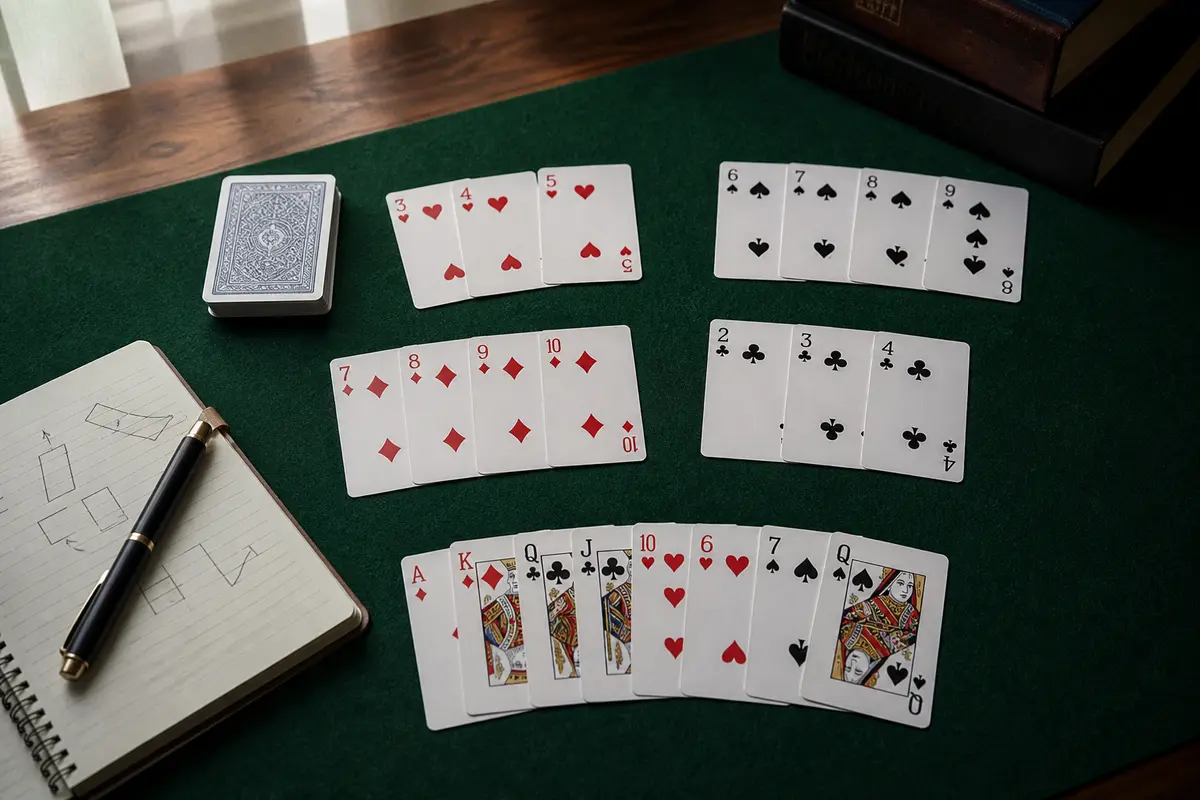
A professionally photographed card-study table with plausible rummy sequences arranged beside an editor’s notebook.
Editorial visual · photographed for the comeon Rummy Desk field guide
Three decisions that matter

Read the evidence before you act

1

Protect the pure sequence

It is the first structural requirement, so avoid breaking it for a speculative meld.

Practical check: Treat every draw as new information. Save the relevant rule or screen with its date so a later change is easy to identify.

2

Track exposed cards

The discard pile reveals useful information without pretending to predict unseen cards.

Practical check: Discard high unmatched cards when sensible. Save the relevant rule or screen with its date so a later change is easy to identify.

3

Manage the clock

Choose a repeatable sort-and-scan routine before time pressure affects the hand.

Practical check: Do not chase losses with larger stakes. Save the relevant rule or screen with its date so a later change is easy to identify.

Before you continue

A four-point check

  • Treat every draw as new information
  • Discard high unmatched cards when sensible
  • Do not chase losses with larger stakes
  • Separate card decisions from budget decisions
Working method

Turn claims into a dated record

A useful review separates what the interface currently shows from what a promotion or third party promises. Start with the official terms, capture the exact condition that affects the decision and record when it was checked.

Then test the path a real user must follow. Labels, limits and support routes should remain understandable before any payment or personal data is submitted. If the evidence conflicts, stop and ask the operator for a written answer.

This desk does not treat availability as proof of safety, legality or value. The final decision should reflect age eligibility, location, budget and the current published rules—not urgency or an expected result.
#Verification pointEvidence to keep
01Treat every draw as new informationLocate the published evidence, note the date and confirm it still applies to your account and location.
02Discard high unmatched cards when sensibleLocate the published evidence, note the date and confirm it still applies to your account and location.
03Do not chase losses with larger stakesLocate the published evidence, note the date and confirm it still applies to your account and location.
04Separate card decisions from budget decisionsLocate the published evidence, note the date and confirm it still applies to your account and location.
Next guide

Check the platform controls

Continue with the connected guide and verify the details that affect your own account, location and playing limits.

Continue reading